The Strategy-as-Outreach Playbook
How agencies are replacing capabilities decks with personalized strategy documents and doubling their reply rates.
By Nico, Founder & Strategist, BrioPublished Updated
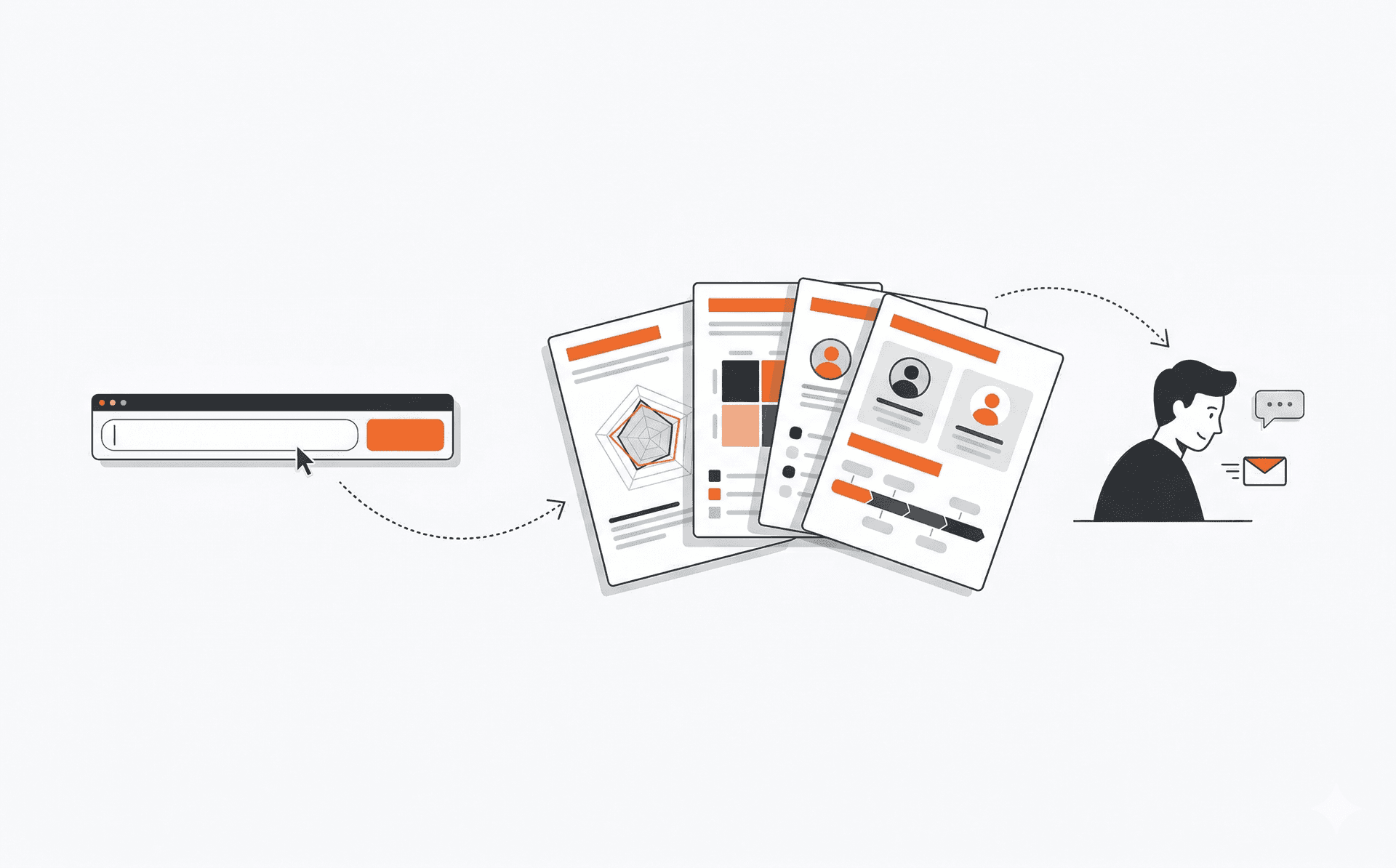
The agency that sends strategy before the first call is the agency that gets the reply.
Personalized outreach generates 2× the reply rate of generic templates (Instantly, 2026)
of decision-makers engage with cold outreach tailored to their business (Sopro, 2026)
of decision-makers say cold emails fail because they aren’t relevant to their business (Hunter.io, 2026)
Business-specific personalization drives 56% higher reply rates (Hunter.io, 2026)
What is strategy-as-outreach?
Strategy-as-outreach is a prospecting method where agencies send personalized strategy documents to prospects instead of capabilities decks or generic audits. The strategy document contains competitive intelligence, audience profiles, positioning frameworks, and a 90-day roadmap, all specific to the prospect’s business.
The prospect opens a document that reads like a senior consultant prepared it specifically for their business. They experience the agency’s strategic depth before the first conversation happens. The outreach is the demo.
2×
Reply Rate Lift
Advanced personalization doubles cold email reply rates, from ~9% generic to ~18% tailored.
Source: Instantly 2026 Benchmark Report →61%
Reject Irrelevant Outreach
The number one reason prospects don’t respond to agency outreach is that it’s not relevant to their business. 61% of decision-makers say cold emails fail because they aren’t personalized.
Source: Hunter.io State of Email Outreach, 2026 →Why do strategy documents outperform audits in cold outreach?
Strategy documents outperform audits because they demonstrate what the agency would do for the prospect’s business, not just what’s wrong with their website. Audits create defensiveness; strategy creates desire.
Capabilities Deck
“Another agency pitch.”
Every agency sends one. Every prospect skips one.
- × Zero differentiation. About the agency, not the prospect
- × No strategic depth
- × Starts: “Tell me about your agency”
Website Audit
“I already know my site has issues.”
Automated checklists of what’s broken. Free tools produce the same thing.
- × Commoditized. Anyone can run one
- × Negative framing creates defensiveness
- × Some tactical value, no strategic vision
Strategy Document
“This agency already has a plan for my business.”
Competitive intelligence, audience profiles, positioning framework, and a 90-day roadmap, all built for their business.
- ✓ No one else sends strategy cold
- ✓ Forward-looking vision, not problem listing
- ✓ Starts: “When can we talk about implementation?”
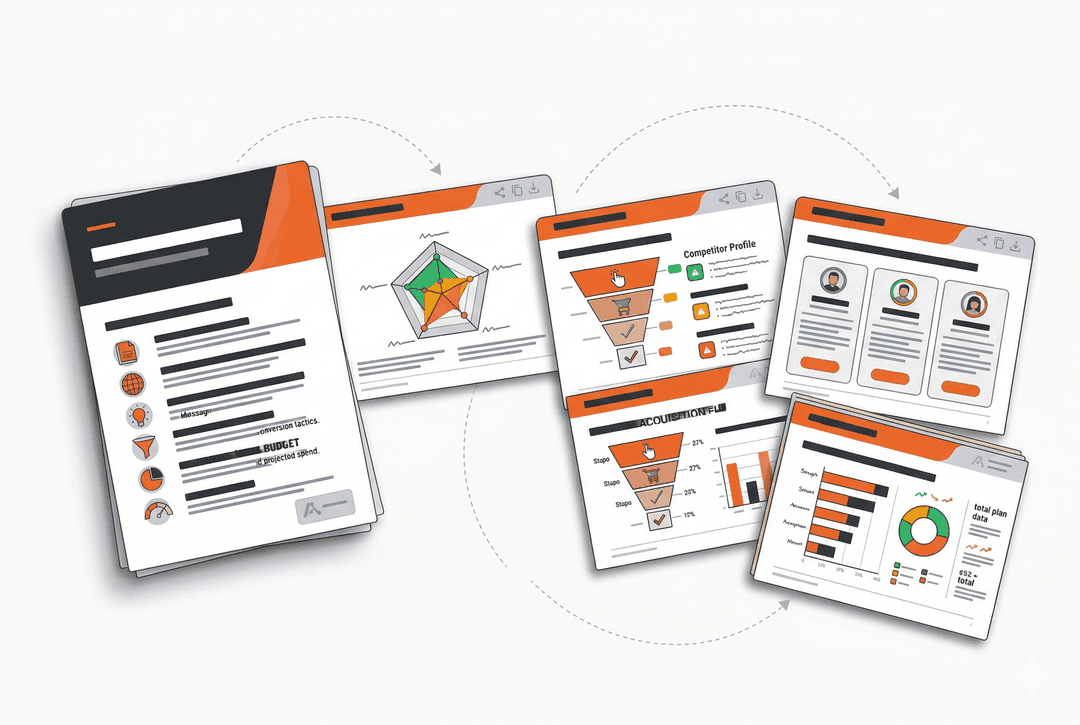
What should a strategy document contain?
A strategy document for cold outreach should contain five core sections: competitive intelligence, audience profiles adapted to business model, a positioning framework, a content roadmap, and a prioritized action plan, all personalized to the specific prospect’s business.
Competitive Intelligence “They know my competitors and found gaps I’d missed.”
3 competitors identified and analyzed. Positioning matrix showing where each is strong, where they’re vulnerable, and where your prospect can exploit the gap.
Audience Profiles “They know who my customers are better than my last agency.”
Behavioral profiles adapted to business model. B2B SaaS gets buying committee profiles. E-commerce gets customer segments. Services gets client profiles.
Positioning Framework “This isn’t a list of problems. This is a plan.”
Messaging pillars, value proposition, and a differentiation strategy built around the prospect’s actual competitive position, not generic best practices.
Content & Channel Roadmap “They already have campaigns for my business.”
90-day plan with specific content themes, channel priorities, and campaign concepts, all tied to the audience profiles and competitive gaps above.
Action Plan “They’ve already thought about what my first 90 days look like.”
Sequenced implementation: quick wins for the first 30 days, medium-term plays for 60, and strategic bets for 90. Ready to present in a pitch meeting.
81%
Engagement
81% of decision-makers engage with outreach tailored to their company.
Source: Sopro, 2026 →2×
Closed Wins
Proactive seller-initiated opportunities close at 33–41% vs 18–25% for buyer-led ones.
Source: Corporate Visions, 2025 →How can agencies send personalized strategy to every prospect?
Agencies can send personalized strategy at scale using tools like Brio, which deliver a consultant-grade strategy document from any prospect’s URL, white-labeled with the agency’s brand, in minutes instead of hours. Agencies that sell the same document as a fixed-price offer run the productized strategy playbook in parallel, and agencies that let website visitors generate the same document from their own URL run the strategy-as-lead-magnet playbook on their site.
Enter a prospect’s URL
No briefs, no intake forms. One URL is all you need to build a full strategy.
Get your branded strategy
45 pages of strategy, white-labeled with your brand. Ready in under 5 minutes.
Send it as cold outreach
Send strategy, not introductions. Win deals on first contact.
What are the results of strategy-based outreach?
Agencies using strategy-based outreach report significantly higher reply rates, faster deal cycles, and higher close rates because the strategy document pre-qualifies the conversation.
The moment that changes everything.
A business owner you’ve never met opens a document with your logo on the cover. Inside: their competitors mapped, their audience profiled, their next 90 days planned. They didn’t ask for it. No one else sent anything like it.
→ They reply the same day.
Frequently Asked Questions
What is the difference between a strategy document and a website audit?
A website audit lists what’s broken. A strategy document shows what’s possible: competitive positioning, audience profiles, a messaging framework, and a prioritized roadmap. Audits create defensiveness. Strategy creates desire.
How long does it take to create a strategy document?
Manually, a senior strategist needs 8–15 hours per prospect. With Brio, agencies receive a consultant-grade strategy document in under 5 minutes from any business URL.
Can I put my agency’s brand on the strategy document?
Every plan includes full white-label. Your logo, brand colors, consultant name, and agency contact details appear on every page. The prospect sees your agency’s work, never the platform behind it.
How many prospects can I send strategy to per month?
Without automation, most agencies manage 3–5 per month. With Brio, agencies send personalized strategy to every prospect in their pipeline, 50, 100, or more. Volume stops being the bottleneck.
Does this actually work for cold outreach?
Personalized outreach doubles reply rates (Instantly, 2026) and 81% of decision-makers engage with outreach tailored to their business (Sopro, 2026). A strategy document is the most personalized thing you can send cold.
Does the strategy adapt to different types of businesses?
Brio detects the business model (B2B SaaS, e-commerce, services, enterprise) and adapts the entire report. A SaaS company gets buying committee profiles. A restaurant gets local client segments. Same platform, different strategy.

Nico
Founder & Strategist, Brio
Founder & Strategist at Brio. 20 years building digital strategy across the US and Europe, including roles at Digital Silk and NASDAQ-listed companies (Scientific Games, The Stars Group). Built Brio to solve the problem he watched agencies struggle with for two decades: scaling personalized outreach without burning senior hours.